

Creating a sustainable future takes action
Our ambition is focused on three core areas:

Acting on climate change
to aim for net-zero carbon by 2040.

Taking social action
to help people build a brighter future.

Embedding sustainability
into how we do business.
Our progress
We aim to become a net-zero carbon emissions company by 2040. We don’t have all the answers yet, but we’re making steady progress to reduce our impact and act as a force for good alongside our partners.
Our partners
We support the work of our partners to help build a sustainable, resilient future for our customers and the communities we serve.
Our people
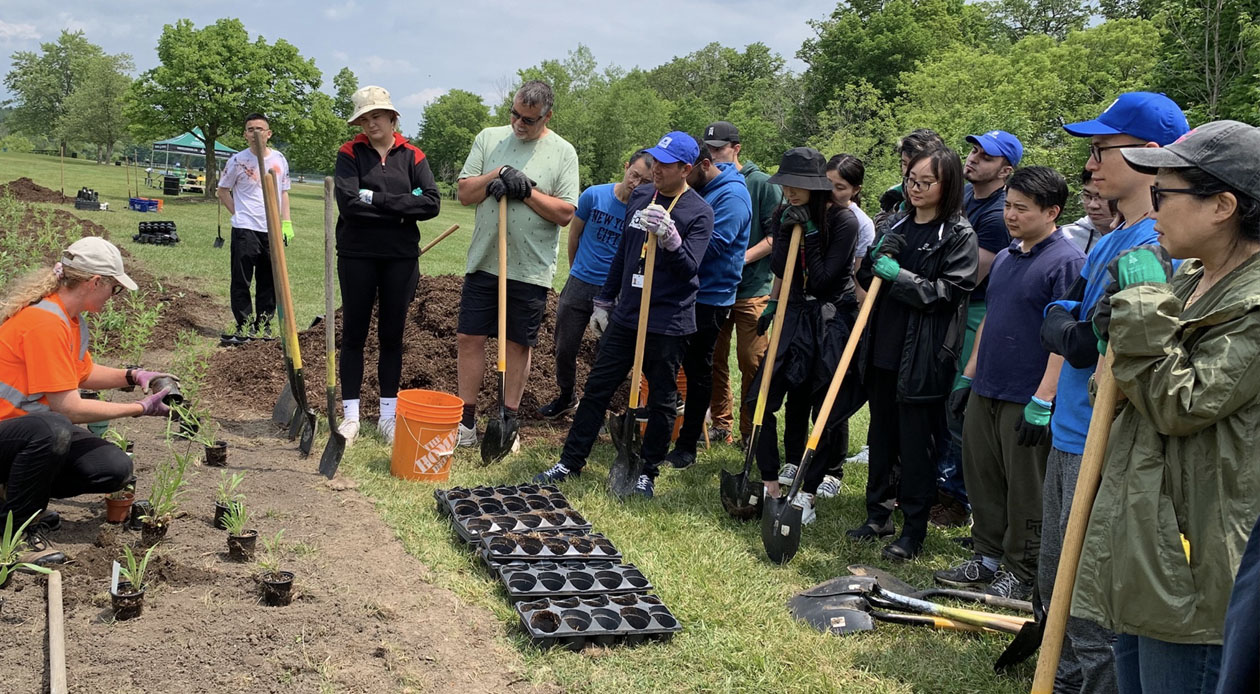
From volunteering to charitable giving to embedding sustainability into their business goals and priorities, our people are empowered to take action for our planet and our communities.
Sustainability news
Aviva pledges $6M to Nature Conservancy of Canada for conservation and nature-based carbon removal projects
Thousands of Aviva Canada employees take part in third annual Climate Day
Aviva Canada announces eight Canadian municipalities to receive electric charging stations
Climate change and insurance 101
How is the Insurance Industry impacted by climate change?
From wildfires to floods, hurricanes and hail, climate change is here and is impacting communities across Canada in devastating ways. We see this reflected in our industry’s data:
- Claims from severe weather and wildfires have quadrupled across Canada since 2008.
- In 2024, for the first time in Canadian history, insured damage caused by severe weather events surpassed $9 billion, totaling $9.2B in insured losses (this is more than the combined total losses for 2023 ($3.1B), 2022 ($3.1B) and 2021 ($2.1B)).
While this economic impact is staggering, we must also emphasize the human impact we hear from our front-line teams every day. Every dollar in losses represents someone’s home, someone’s memories, someone’s life turned upside down.
If left unchecked, this trajectory is unsustainable. Based on current trends, severe weather events will continue to escalate in both frequency and severity, threatening the cost, availability, and scope of insurance coverage available to Canadians.
How can I protect myself from the risks associated with climate change?
Climate change is altering our weather patterns, making them more unpredictable and increasing the severity and frequency of major events such as fire, flood and storms. For homeowners, this means the risks to your home and property may be changing as flood maps and fire zones evolve and shift.
The good news is that there are many tried & tested preventative steps you can take to defend your property and reduce your risk.
Flood
Water damage is the biggest risk affecting Canadian properties, a risk that is increasing with changing weather patterns due to climate change. Depending on where you live, rapid ice melt, heavy rainfall events, and even ice damming can cause water damage to your home. However, there are many practical steps you can take at home to help safeguard your property against any potential water damage.
How to safeguard your property against water damage
Fire
Wildfire season in Canada is getting longer and more intense, impacting areas previously thought to be low-risk. If you live in or near wildfire-prone areas, there are practical actions you can take to help prevent and mitigate fire damage should it find a way towards your home.
Navigating wildfire prevention and preparedness
Storms
Major storms such as hurricanes and hailstorms are becoming more frequent, and the wind, water, and hail associated with them can cause major damage to your property. If you live in areas where major storms are a risk, there are many ways you can update your home to help prevent against damage.
What does it mean to be net zero and why is it important if Aviva is already carbon-neutral?
Aviva's been carbon neutral since 2006 by supporting carbon offsetting projects that balance out the residual emissions produced through our buildings and operations.
Becoming net zero takes this a step further - achieving a balance between carbon emissions we produce and those we remove from the atmosphere.
To achieve this, we aim to measure, monitor, manage, and reduce the carbon emissions we produce ourselves, as well as those produced by our suppliers and in-scope investments we make on behalf of customers and shareholders. For those residual emissions which we cannot reduce entirely, we’re supporting projects that remove greenhouse gases from the atmosphere, such as the nature-based carbon removal projects we have invested in through our partnerships with organizations such as Wild + Pine and the Nature Conservancy of Canada.
When this balance is achieved, it means we have reached net zero and are not adding more carbon emissions into the atmosphere and contributing to the global rise in temperature.
Learn more about our net-zero ambition
Learn about our progress in our 2024 Climate-related Financial Disclosure
Sustainability reports and policies
The following reports and policies reflect our commitment to being a responsible and transparent organization.