

Four in five businesses report being impacted by the US-Canada trade war, according to a March 2025 Canadian Federation of Independent Business survey. In addition to uncertainty and a weaker dollar, tariffs— and counter-tariffs—are having a profound effect on sales, supply chains, financial instability, and overall operations.
As a Canadian insurer, Aviva is deeply engaged in analyzing the impacts of tariffs on our clients’ businesses and proactively formulating solutions to support you. This includes exploring strategies to mitigate the insurance impacts of international trade tensions.
Passing on our purchasing power
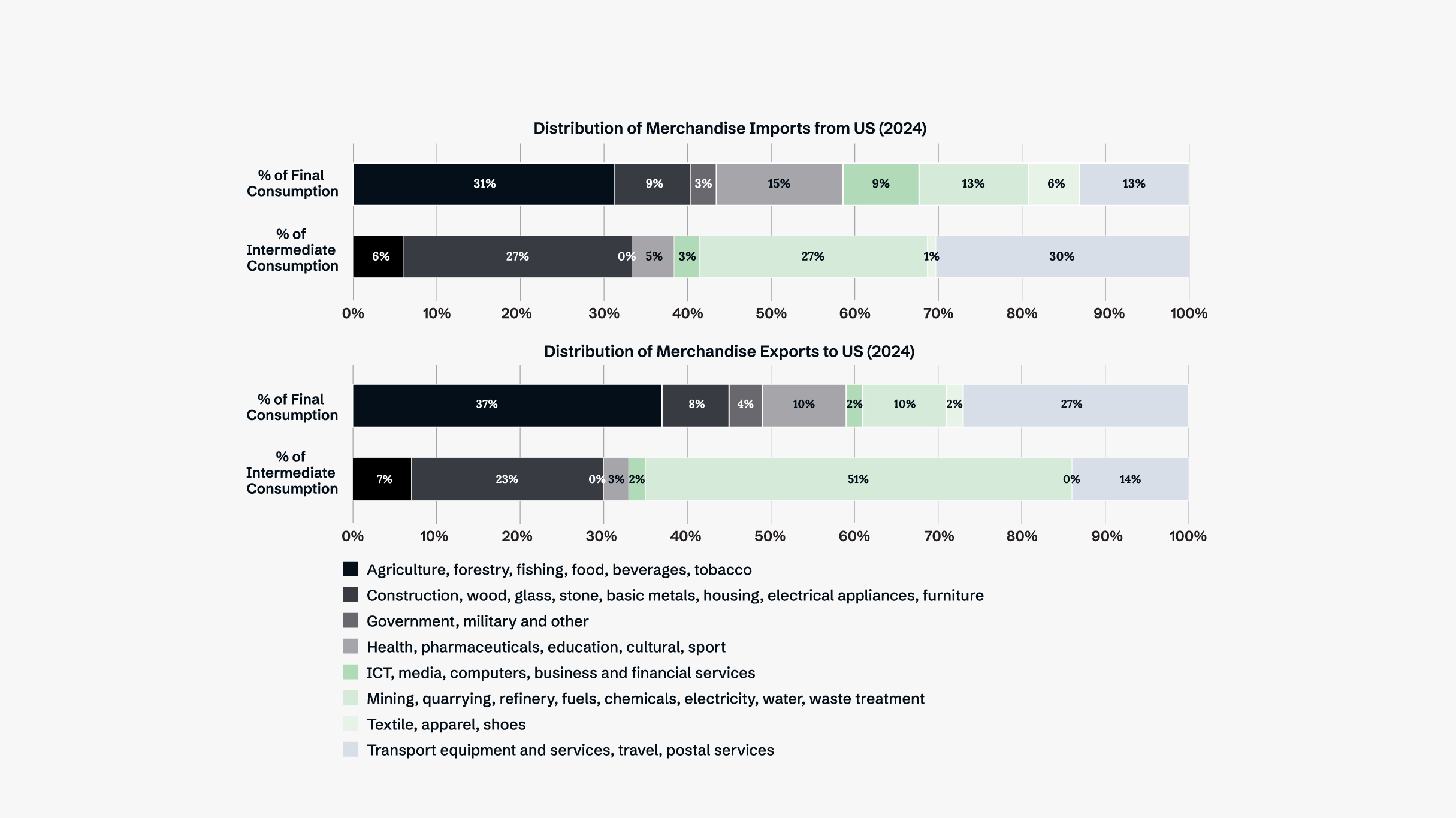
We anticipate that the cost of fulfilling auto and property insurance claims will initially rise as auto parts, construction materials coming and going across the US border are subject to tariffs, including iron, steel, aluminum, and some imported vehicles. About 50% of our auto parts and 30% of housing parts are imported.
However, Aviva Canada spends a large portion of the premiums we collect to fulfil claims, including repairing and rebuilding properties, structures, and vehicles. A considerable amount of those auto and building materials have historically come from the US. Like most prudent Canadian companies, we are actively seeking alternative suppliers for key parts and construction materials to minimize the impact of US tariffs. Our GCS clients stand to benefit from our purchasing power in the claims process.
For clients who self-insure physical damage for their fleets or have significant deductibles on them, using Aviva AutoCare Centres and partner body shops may also help reduce tariff-related repair costs. Our centres and preferred vendors can provide the value of speed, convenience, preferential rates—and the advantage of the tariff mitigation actions we’re taking in our supply chains.
Reducing liability could lead to premium savings
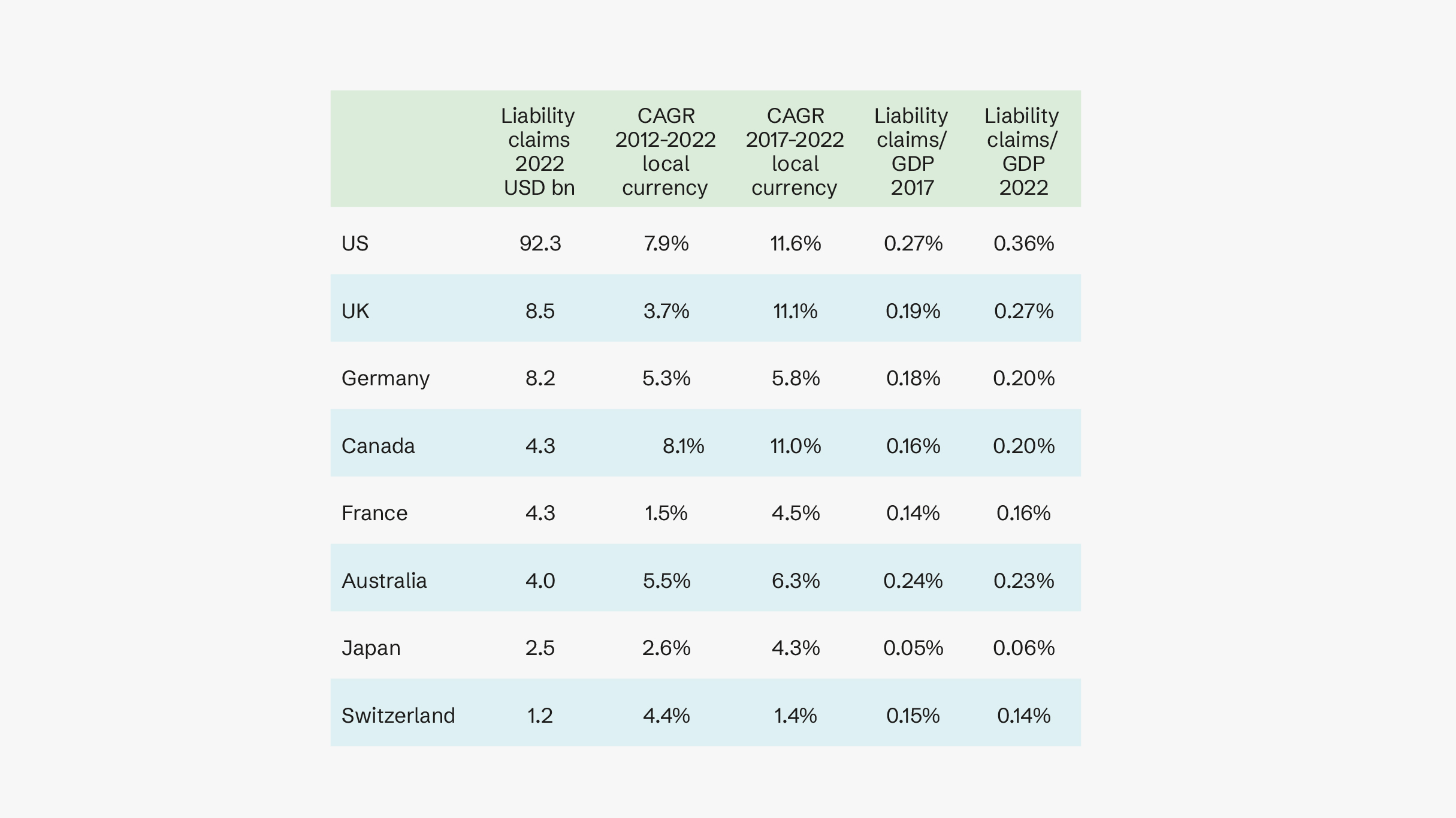
One of the silver linings to a business reducing its reliance on the US is a potential reduction in liability. The legal and regulatory environments in the United States, particularly concerning product liability, can be more litigious and carry potentially higher damage awards compared to Canada and other countries.
Your liability premium may be reduced as your exposure to the US legal system diminishes. If your sales and supply chain shifts, it’s crucial to communicate that to us.
General liability claims in USD, growth in local currency nominal terms, and as % of GDP
Other strategies to minimize tariff-related insurance impacts
- Assign accurate values for insurance coverage: As costs soar, it is more critical than ever to ensure your coverage matches the true value of your business, including for business interruption and liability protections. Failing to set the right values for commercial buildings, equipment and loss limits could cost enterprises millions of dollars in the event of a large loss.
- Share hardship with your broker and insurer: If your business experiences significant loss of sales due to the tariffs, be sure to communicate your new reality and future forecasts. Aviva may be able to provide assistance.
- Maintain the cost of maintenance: When higher costs are unavoidable, the shortfall needs to come from somewhere. We caution against reducing routine and preventive maintenance practices to avoid costly and preventable losses. Instead, refresh bidding processes to reflect true costs.
Effectively managing tariff-related uncertainties demands strategic foresight and collaborative effort. As a fellow Canadian business with a UK parent company, Aviva stands ready to support our clients through these changes. We’re here to provide essential insights, solutions, and support to help ensure your continued operational success.


