

As the risk of more frequent and extreme weather events increases, companies across every industry are rethinking how to improve property resilience. While retrofitting is often seen as a way to improve energy efficiency or reduce emissions, it also plays a critical role in protecting buildings and extending their long‑term value. It also helps companies strengthen and future-proof physical assets.
Why retrofit? Why now?
According to the Canada Green Buildings Strategy: Transforming Canada’s buildings sector for a net-zero and resilient future, buildings are the third-largest carbon emitting sector in Canada. More importantly, most of the 16 million homes and commercial buildings standing today will still be standing in 2050.
Actions to upgrade these spaces should be taken now. The scale of this renewal requires a rapid increase in the pace of retrofits. New buildings must be built with net-zero emissions in mind to avoid having to retrofit them. Because buildings are long‑lived assets, decisions made today will determine whether they remain fit, insurable, and cost‑effective to operate as Canada moves toward its 2050 net‑zero goal.
Simultaneously, we must make these buildings stronger. This includes waterproofing, flood protection, and installing batteries connected to solar power systems to withstand outages.
The cost of vulnerability
When Aviva Canada leaders attended the Retrofit Canada conference in 2025, the Geneva Association’s Director of Climate Change and the Environment Maryam Golnaraghi painted a stark picture.
According to the 2022 Canadian Core Public Infrastructure Survey, 16% of roads, 14% of bridges and tunnels, and 11% of water infrastructure are in poor or very poor condition. This makes them—and the businesses that rely on them—highly vulnerable to extreme weather events.
According to Golnaraghi, it’s not surprising then, that, since 2000, insured losses from localized, frequent hazards like floods and wildfires have accounted for approximately 95% of total insured losses.
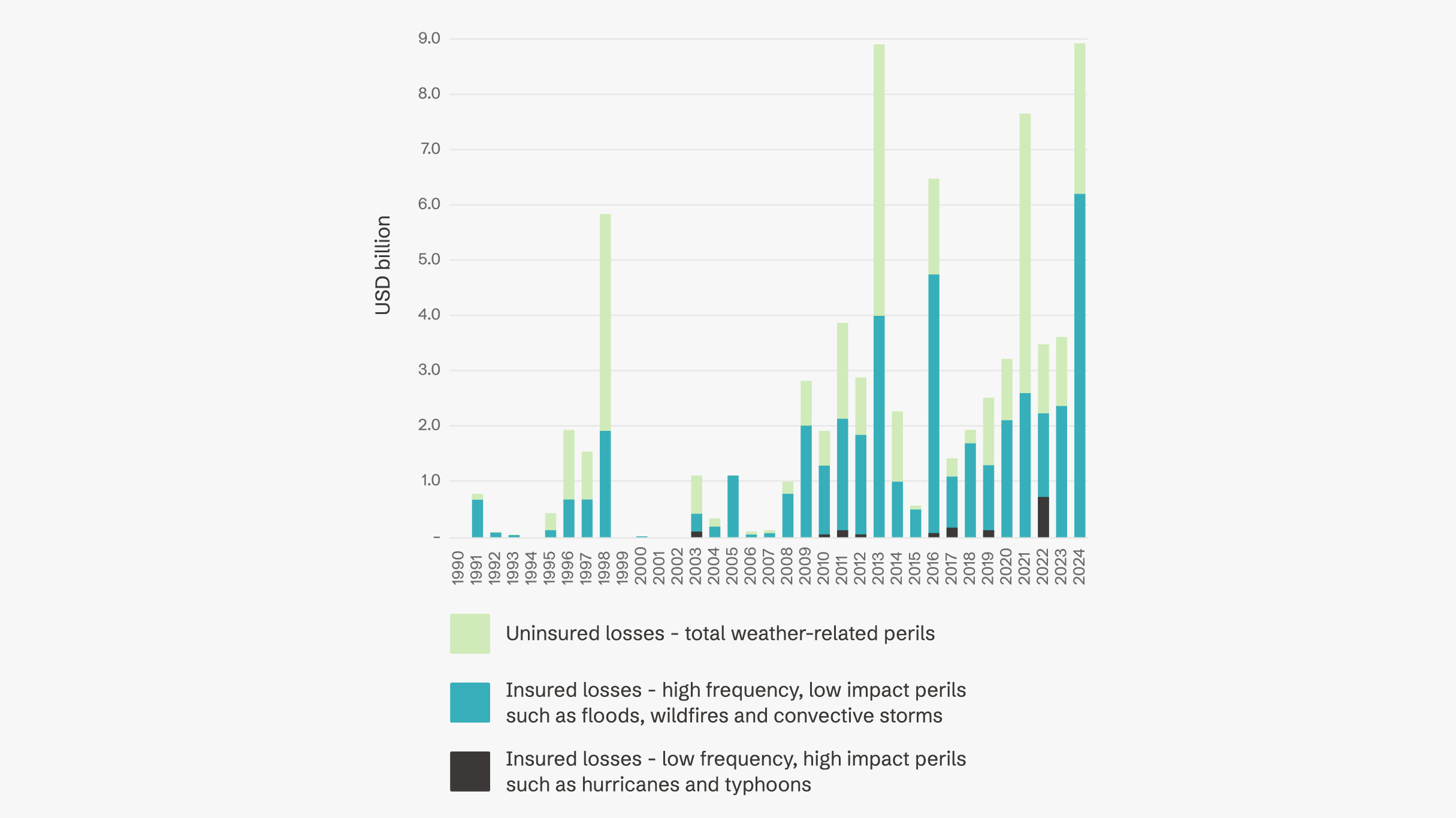
The insurance perspective
Insurers are adapting to this new reality. Traditional pricing models based on historical data are evolving to account for the increased frequency of severe events like floods, wildfire, and hail.
This is impacting how insurers are thinking about coverage in high-risk zones. with higher deductibles, lower limits, and exclusions for overland flooding or wildfire damages becoming more common. Reinsurers are also tightening terms and raising premiums.
Climate-related risks are becoming increasingly difficult to insure without risk‑reduction mechanisms. Aviva Canada has invested in improving its understanding of these risks, including expanding internal meteorological and ESG analytics expertise to better support customers.
In Canada, insurance industry-wide efforts are under way to develop pools for extreme risks. The National Flood Insurance Program is in the works, and the task force on flood insurance is exploring options for high-risk areas.
National pooled risks shouldn’t end there. A pooled risk built in collaboration with industry and government spreads extreme risks while keeping coverage available for customers—especially those investing in climate resilience.
New technology is making it easier to upgrade buildings and reduce emissions. Many retrofits now use modern, low‑carbon heating and cooling systems as part of electrification and net‑zero projects. Because these systems are more advanced, it’s important to manage the risk of breakdowns. Equipment Breakdown Insurance (EBI) helps by protecting key building equipment if it fails, giving building owners more confidence to invest in newer, low‑carbon technologies.
Programs creating risk mitigation and product innovation opportunities
- Canada’s National Adaptation Strategy
- IESO eDSM
- City of Vancouver GHG by-law
- Toronto’s Net-Zero Retrofit Standard
- Calgary Climate Implementation Plan
- Geneva Association’s resilience collaborations
How Aviva can help your company retrofit
We are committed to helping you strengthen your resilience.
Our Build Back Better initiatives focus on replacing damaged property with more resilient materials.
The Aviva Specialist Partner Network offers access to pre-vetted companies that can help with risk management and loss prevention.
Finally, our Aviva Risk Management Solutions (ARMS) specialists can provide the expertise needed to assess your specific vulnerabilities and plan your risk management strategy.
For more information, speak with your insurance broker or contact us at gcs.ca@aviva.com


