

Falling prices in the clean energy sector are generating significant interest among Canadian companies of all sizes. Google Canada, TD, Bell Canada, and Walmart Canada are just a few of the bigger players that have signed power purchase agreements (PPAs) with renewable energy developers, particularly for wind and solar energy.
According to Business & Industry Canada, some of the leading examples of renewable energy investments and results include:
- Bell Canada sources 80% of their electricity needs from wind farms in southern Alberta. This initiative reduces their carbon footprint and ensures stable energy costs over the long term.
- The 224KW solar energy system of Mountain Equipment Co-op’s Vancouver retail headquarters generates approximately 20% of the building’s electricity needs, saving over $30,000 annually in energy costs.
- Nova Scotia’s Oxford Frozen Foods, one of North America’s largest wild blueberry processors, implemented a 1MW solar installation that powers their cold storage facilities. The investment has reduced operational costs and strengthened their position as an environmentally responsible food producer.
Why are businesses increasingly investing in renewable energy?
Decreasing costs of renewable technologies, economic benefits like lower energy bills and increased productivity, government incentives and regulations promoting clean energy, and growing consumer demand for sustainable products and services are all motivating Canadian businesses to integrate renewable energy into their operations.
Cost savings
Renewable energy sources like wind and solar are becoming increasingly affordable and are often cheaper than new fossil fuel-based power generation. According to the International Renewable Energy Agency (IRENA), the cost of electricity from solar photovoltaics has dropped by 82% since 2010, making it one of the most affordable sources of new electricity along with onshore wind.
Business & Industry Canada reports that manufacturing firms achieve average energy cost reductions of 40% after implementing solar solutions through Canada’s Industrial Energy Efficiency Program. And commercial property owners have secured up to $500,000 in federal grants for building retrofits.
These cost reductions allow businesses to significantly lower their energy expenses. The Carbon Trust reports that switching to renewable energy can result in a 20–50% decrease in energy costs. The Canadian government is actively promoting clean energy through initiatives like clean electricity regulations, tax credits, and grants for green infrastructure projects, making investment more attractive and accessible.
Operational innovation
Investing in renewable energy fuels innovation and can bolster a company’s competitive position in the marketplace. Businesses that embrace clean energy often spearhead technological advancements, using this shift to create new products, services, and operational efficiencies. This progressive approach appeals directly to investors that prioritize sustainability, potentially unlocking additional funding and long-term growth.
Consumer and shareholder appeal
More than 84% of respondents to a PwC 2024 Voice of the Consumer survey reported that they have experienced first-hand the disruptive effects of climate change in their daily lives. As a result, these consumers say they are willing to pay an average of 9.7% more on sustainably produced or sourced goods.
When businesses adopt sustainable practices such as integrating renewable energy, they can elevate their brand image in the eyes of their customers and further drive loyalty. Pursuing environmental, social and governance (ESG) goals can also go a long way with company shareholders.
Risk management and control
Energy prices fluctuate and knowing when to lock in at the best price, and for how long, is a constant challenge for businesses. This is why many are signing long-term PPAs with energy providers that specialize in predictable renewable energy.
Some are even installing their own clean energy infrastructure, including solar arrays or roofs to secure stable and lower energy prices.
Climate change-induced extreme weather leads to higher electricity demand, straining the grid during peak times and potentially causing outages. Existing energy infrastructure, much of which was built for past climate conditions, is vulnerable to impacts like high winds, heavy snow, ice, and flooding. Renewable solutions can help companies reduce their dependence on electricity grids.
What are renewable energy options?
Depending on your sector and type of operation, there are many potential solutions, including:
- Solar energy: Uses photovoltaic technology to convert sunlight into electricity, with potential applications for heating buildings (solar thermal).
- Wind energy: Converts wind into electricity through turbines, leveraging Canada’s extensive landmass and diverse geography.
- Hydroelectric power: Canada is a global leader in hydroelectricity, which harnesses the power of moving water for electricity generation, particularly through large-scale projects, but small hydropower options also exist.
- Geothermal energy: Explores the earth’s internal heat for energy production, an emerging area of development in Canada.
- Bioenergy: Involves generating energy from living organisms or their byproducts, such as biofuels and biogas.
Battery energy storage systems are also an important technology because they store energy from renewable sources like solar and wind. They make renewable energy more reliable and consistent by releasing it when generation is low.
In 2022, renewable energy sources provided 16.9 percent of Canada’s total primary energy supply.
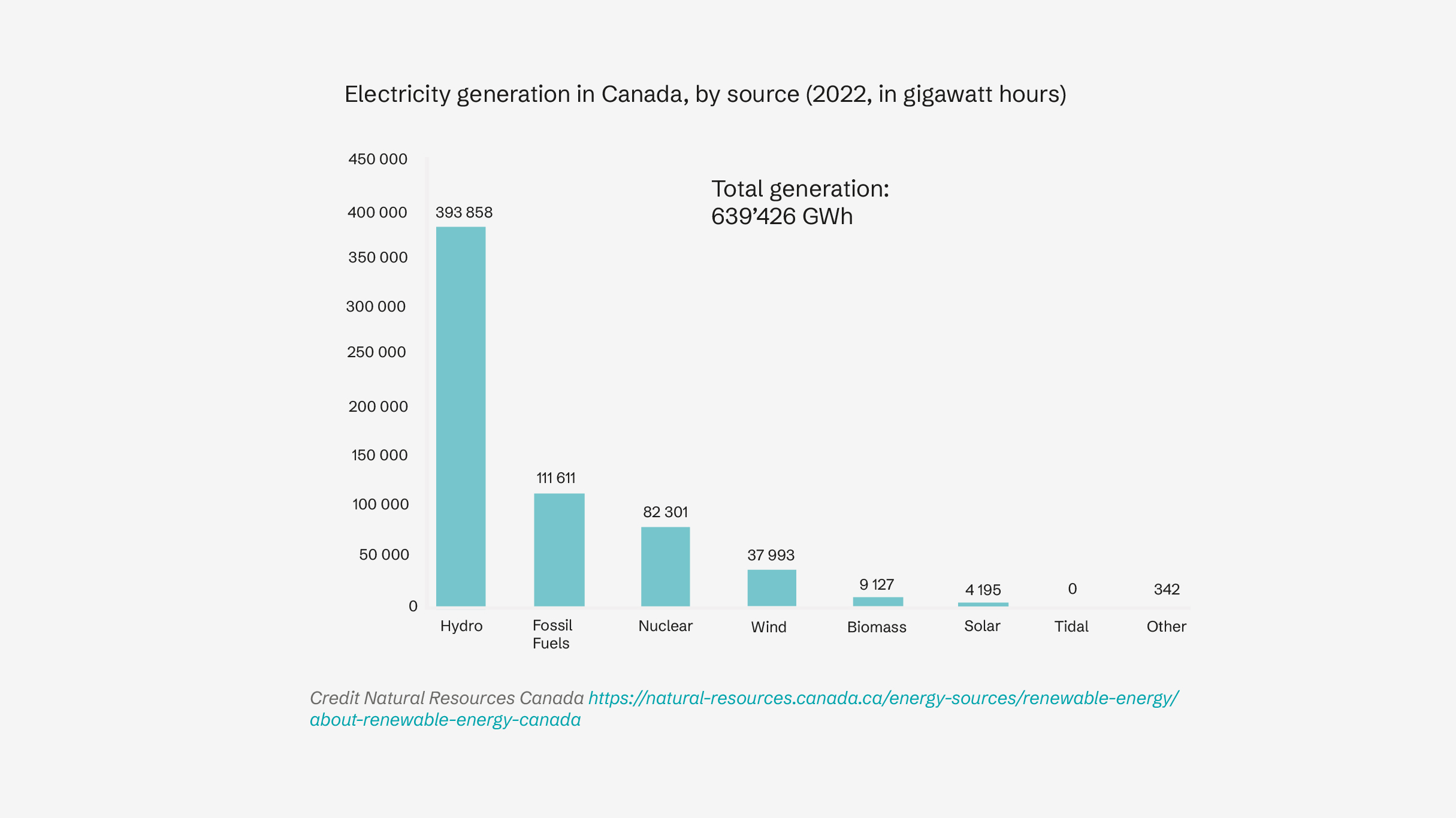
In 2023, generation from wind and solar sources alone represented 7.2% of total electricity. However, the country has enormous capacity for growth. Renewable sources of energy provided Canada with 37.4% more electricity in 2023 than in 2016.
According to the Canadian Renewable Energy Association:
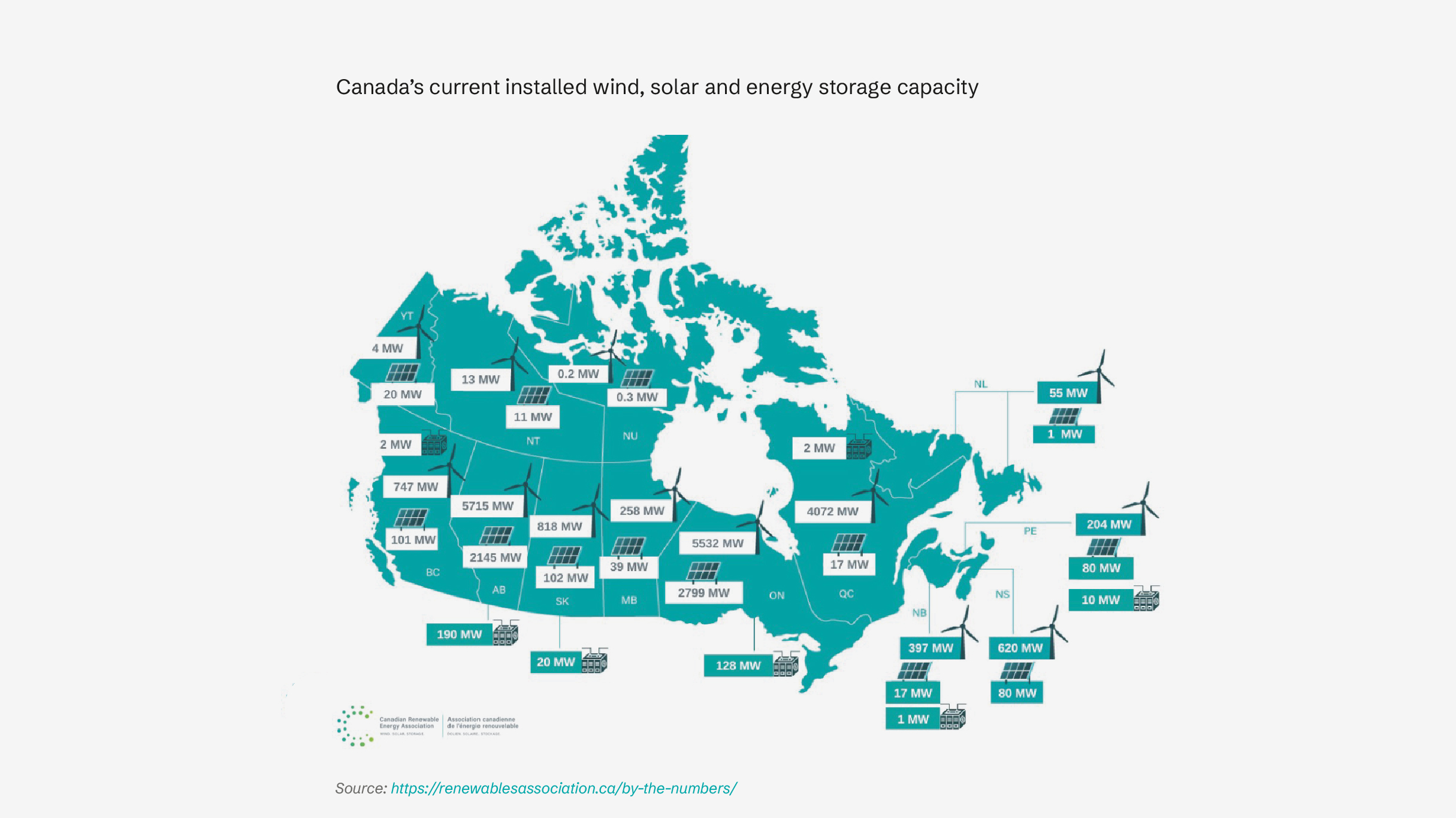
- Canada’s total wind, solar, and storage installed capacity grew 46% from 2019 to 2024.
- Canada has 217 major solar energy projects and 341 wind energy projects producing power across the country.
- Canada ranks 24th in the world for installed solar energy capacity and 9th in the world for wind energy capacity.
Aviva can help with resilience through renewable energy
Many organizations lack the internal resources, technical knowledge, and capacity to assess and manage complex risks, leaving them disproportionately exposed to extreme weather, supply chain disruptions, and critical infrastructure failure.
Aviva is uniquely positioned to help fill this gap by helping with proactive risk advisory services through our Aviva Risk Management Solutions and underwriters. We can identify vulnerabilities, recommend adaptation measures, and support climate resilient investments that can potentially help businesses save on insurance deductibles, premiums and the total cost of risk.
To learn how we can help, please contact our Risk Management Solutions team at ARMS.Canada@aviva.com.


