

According to the Canadian Interagency Forest Fire Centre (CIFFC), the average number of wildfires in Canada prior to 2023 was 5,350 per year. The 2023 wildfire season saw more people evacuated and more area burned than during any other Canadian wildfire season with 7,131 wildfires on record.
Severe wildfires are the new normal
| 42.5M acres of forest were burned by wildfires in 2023 - this is equivalent to the size of: | ||
| 1 Washington State | 3 Nova Scotia | 70% of the UK |
The previous high of 18.7 million acres is based on records dating back to 1989, according to the CIFFC.
Four provinces broke wildfire records in 2023:
British Columbia: | 7M acres burned, more than double the previous record |
| Alberta: | 4.82M acres burned, almost 2 million acres more than the previous record |
| Quebec: | 10.68M acres burned, more than triple the previous record |
Nova Scotia: | 62K acres burned, about 6x the previous record |
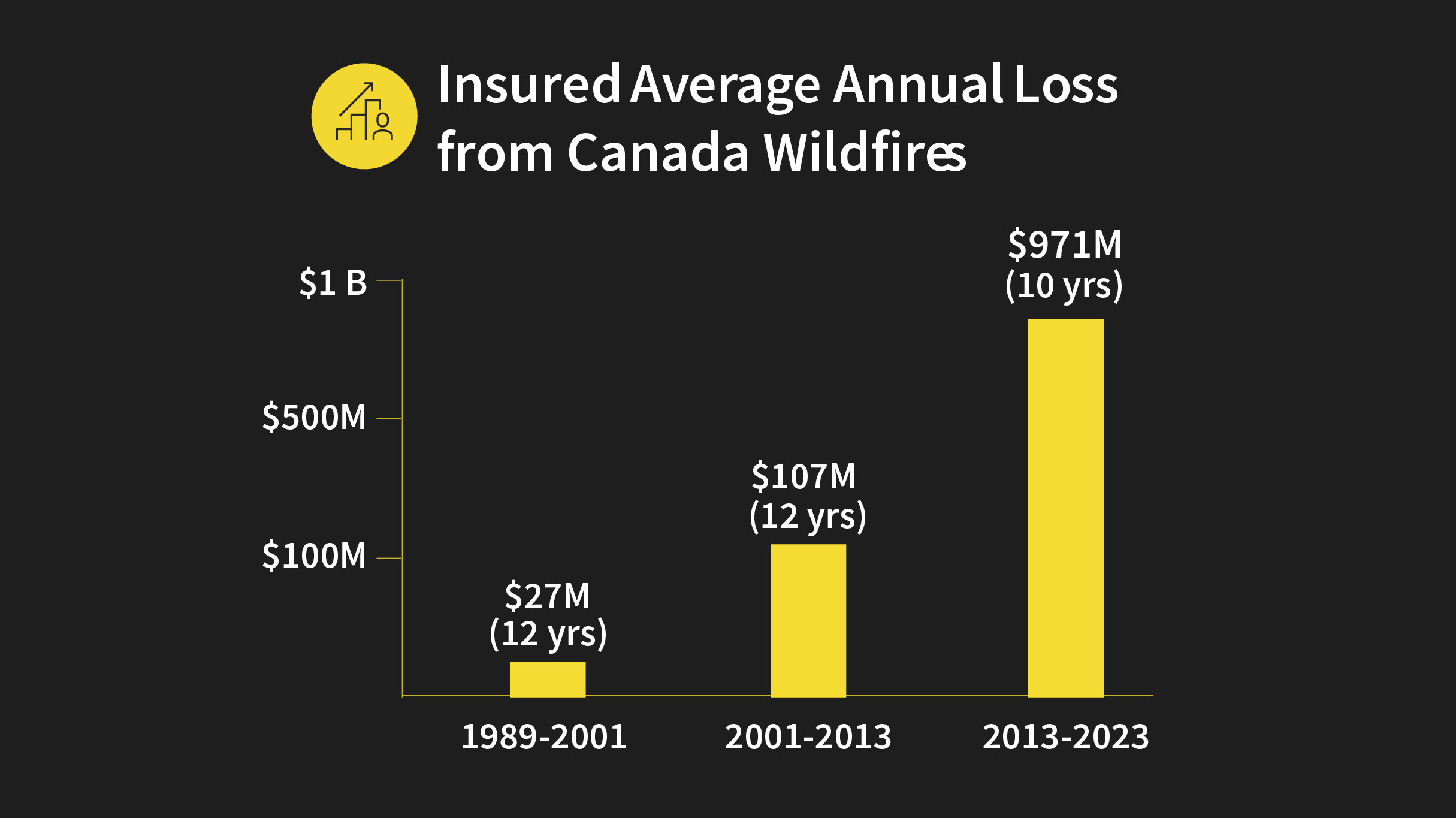
What can we expect in 2024?
In February, Federal Emergency Preparedness Minister Harjit Sajjan acknowledged that this year’s wildfires could be even worse than 2023’s after a scientist with the Canadian Forest Service suggested that we should be on “high alert” for 2024.
Alberta declared wildfire season 10 days earlier than the usual March 1st start due to higher-than-normal temperatures and below-average precipitation in many areas of the province.
There were also “zombie” fires from the 2023 season still smouldering in British Columbia, Alberta and Northwest Territories, fueled underground by porous peat and moss ground cover. While they weren’t considered high risk in the winter months, there is concern that they will flare up when exposed to hot, dry weather.
Climate change is behind the new normal
The annual average temperature in Canada has increased at roughly twice the global average rate, thanks, in large part, to human-induced climate change. These hot, dry and gusty conditions have caused drought, particularly in western provinces and has significantly elevated the risk of wildfires.
The World Weather Attribution, a group of scientists who model how climate change affects extreme weather, reports that climate change was behind Quebec’s 2023 fire season being 50% more intense and makes seasons of this severity at least 7x more likely to occur in the future.
Expect an insurance impact
There’s no question that the ongoing threat of severe wildfires will continue to affect the risk appetite for many insurers and reinsurers. Regions that had never been impacted by wildfire before, including Atlantic Canada, were battling blazes.
At one point, there were wildfires in progress from coast to coast. These also affect pricing and deductibles for commercial customers.
What can you do to protect your business?
- Improve resilience of your defensible space (or ignition zone) which is the area within 30m of a property that has direct impact on the severity and likelihood of a wildfire ignition
- Keep an eye on the Canadian Interagency Forest Fire Centre to see where active fires are burning
- Ensure that your insurance coverage is adequate to the value of the property
- Develop a comprehensive contingency and emergency plan and make sure staff are educated on it
- Add or upgrade vent screens to have a 3mm (or finer) metal screen that will block embers
- Design and maintain an up to 1.5 metre non-combustible buffer around your building with materials such as:
- Hard surfaces (concrete, brick, asphalt)
- Non-combustible mulch or rocks
- Move small structures and combustibles at least 10m away from main buildings or enclose them with
- Non-combustible materials
- Upgrade to tempered insulating glass windows
Learn more about how to protect your buildings and property
These Canadian resources offer actions you can take to help fire-proof your business:
- Make your business wildfire ready, Institute for Catastrophic Loss Reduction
- FireSmart Canada
Looking for risk management solutions for your business?
Global Corporate & Specialty team is here to answer questions and offer advice. Reach out to us at gcs.ca@aviva.com.
Data sources: Canadian Interagency Forest Fire Centre, ICLR Wildfire Bulletin
Graph sources: CatlQ, IBC, National Forestry Database


