

New technologies continue to dominate our day-to-day lives and are evolving at a rapid pace. While they come with tremendous benefits that include game-changing innovation and efficiencies, emerging technologies can also bring challenges.
We’re seeing trends and insights from our claims teams with respect to technologies like GenAI, EVs and lithium-ion batteries. Here are some things to keep in mind.
Generative AI can lead to cyber breaches
Generative AI can help to create content quickly and cheaply, from text generation to image synthesis. But it also opens the door to cyberattacks and privacy breaches that businesses are experiencing at a higher rate than ever.
Some unfortunate claims examples from our commercial customers include:
- Bad actors tricked employees into making payments to fraudsters.
- Hacked email addresses sent notices of altered EFT information to vendors.
- Web domains were stolen.
- Paper cheque replications that were cashed.
- A threat actor sent a customer’s third-party payroll provider instructions to change the direct deposit information.
- A cyberattack shut down a business, leading to lost revenue, and compromised all IT equipment.
- A threat actor stole the personal records of about 90,000 customers and held them for ransom on the dark web, triggering reporting requirements and a subsequent class action lawsuit. At a cost of between $500 to $1,000 per record in the class action, the damages ramp up very quickly and could cost millions of dollars.
While it’s ideal to prevent scenarios like these by taking extra caution, when the right insurance coverage is in place, Aviva’s cyber specialists can step in to help you navigate cyberattacks and protect your company’s reputation.
EVs may be safer, more cost-efficient
The electric vehicle (EV) has come a long way since its first iteration, the 1888 Flocken Elektrowagen, a four-wheeled open carriage with a 1-horsepower electric motor.
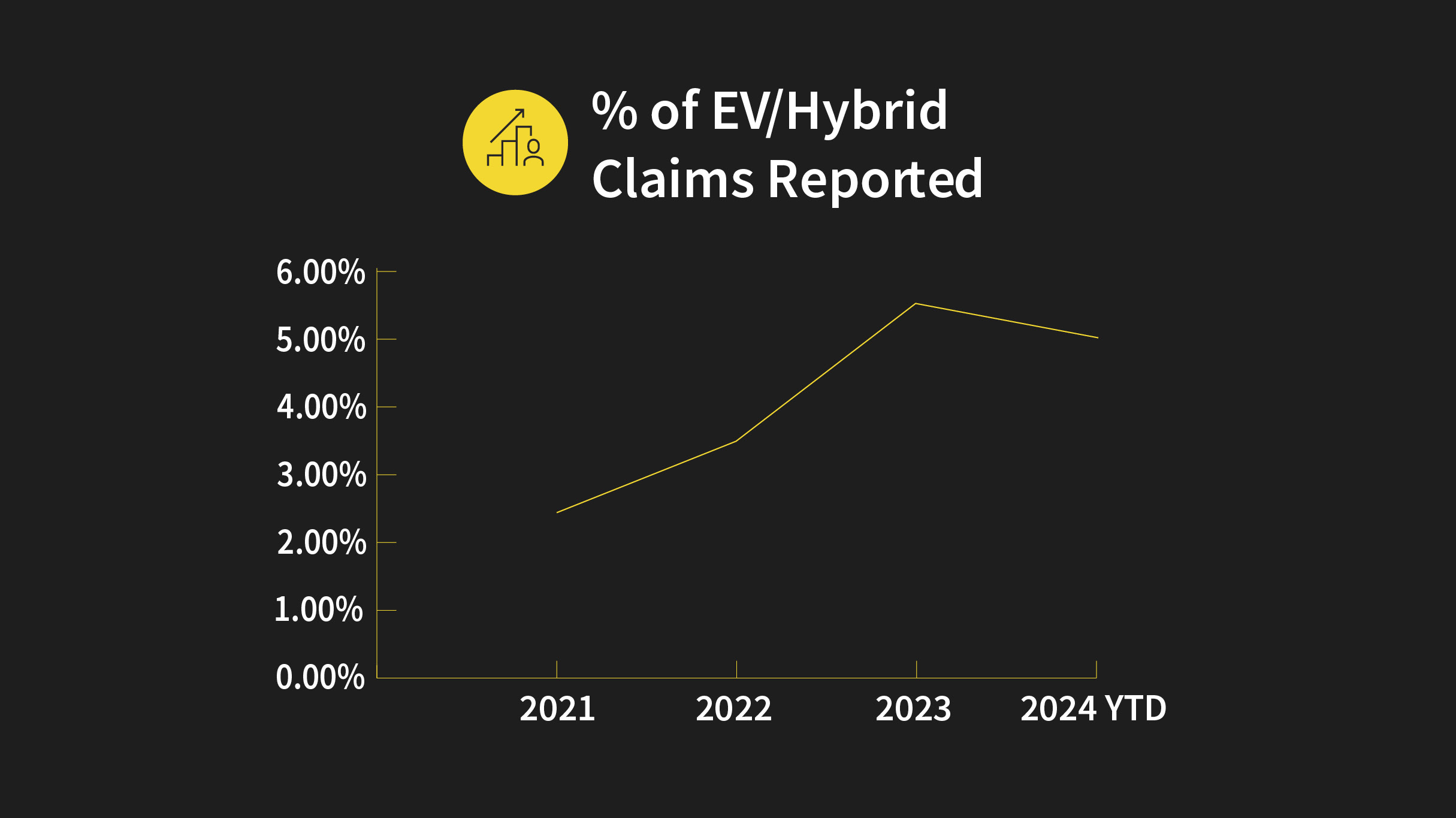
Today, the EV has made a viable comeback. There are so many on our roadways that they comprise roughly 5% of our commercial fleet claims volume — a 50% increase since 2021.
There are lots of environmental benefits that come with owning and operating an EV. If your company is considering investing in them, here are some Aviva claims data comparing 2022 to 2023:
- The average cost of repairing EVs is about 32% higher than the standard combustible vehicle.
- Inflationary pressures have had a more significant impact on EVs (48%) than traditional combustible engines (24%).
- EVs tend to take about 2 weeks longer to repair than combustible vehicles due to challenges with sourcing parts.
- The total loss rate for EVs is significantly lower (7.5%) compared to combustible vehicles (22%) and we see fewer accident benefit claims on EVs (6-8%) compared to combustible vehicles (8-9%). This may be because EVs are newer than conventional fleets and benefit from new technology.
Be cautious with lithium-ion batteries
With the growing popularity of EVs comes the commercialization of the lithium-ion battery, which fuels them. Tesla was the first all-electric car to use lithium-ion battery cells and they are now used by a wide range of EV manufacturers. And they’re not just used in cars, but in a whole host of other products, leading to potential hazards.
There is a growing trend of spontaneous fires associated with lithium-ion batteries, particularly in e-bikes or e-scooters.
Canadian Underwriter reports that, in the US, e-scooters have been the focus of regulatory scrutiny following fires caused by their batteries, including one that claimed two lives in a Brooklyn, NY apartment. A Vancouver woman is suing several makers of e-bikes and e-scooters after an apartment fire in 2022 that she alleges was ignited by the lithium-ion power cell in an e-bike.
At Aviva, we have seen claims where individuals burned their legs on lithium-ion batteries installed in e-bikes. And we have had a case in which the lithium battery from an e-bike caught fire and caused extensive damage to commercial property. Luckily no one was injured.
For more information on how to use lithium-ion batteries safely, review the National Fire Protection Association’s lithium-ion battery safety tip sheet.
Considering investing in new technologies?
Reach out to Aviva’s Global Corporate & Specialty team for tailored advice on how you can protect your business when leveraging. Contact us at gcs.ca@aviva.com


